
September 18th, 2025
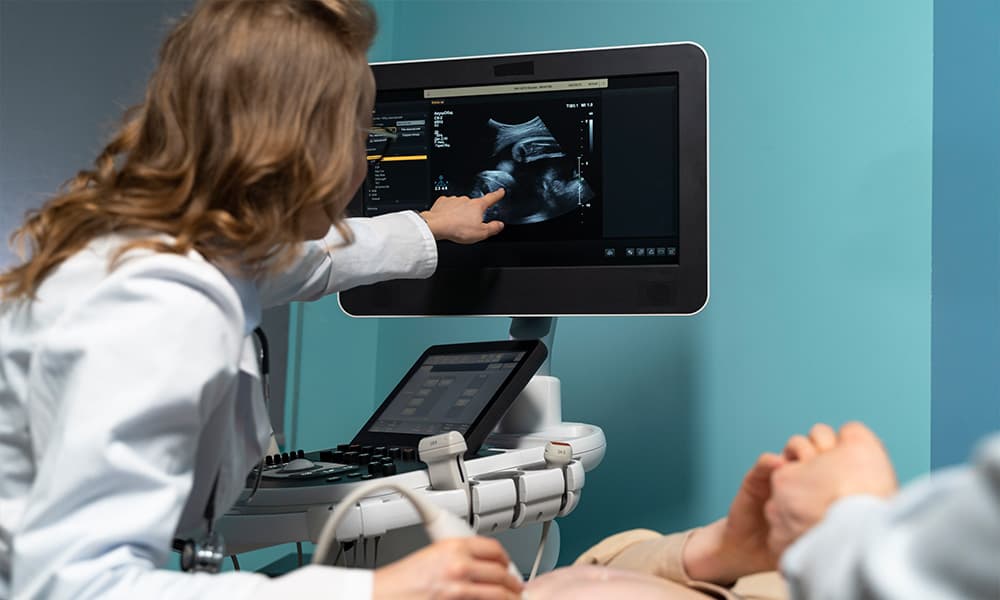
Women find pregnancy to be an exciting time, although there may be times when they are uncertain. Getting regular ultrasounds to track the health and growth of the developing baby is an essential part of prenatal treatment.
We'll answer common queries regarding prenatal ultrasounds in this blog, including when they're advised, their importance, if getting one every two weeks is safe, and its benefits.
An ultrasound, sometimes referred to as a sonogram, is a typical prenatal test that most expectant mothers get. It generates a picture of the fetus inside the uterus using sound waves. This test enables healthcare professionals to track the health and growth of the unborn child during pregnancy.
Prenatal ultrasounds are safe; however, they should only be carried out when absolutely required by a doctor. The frequency and timing of ultrasounds may change for women who have specific medical issues, such as obesity or asthma. Neither radiation nor needles are used during this noninvasive treatment.
An ultrasound is a quick, easy test that can provide you and your doctor with vital information about your pregnancy and fetus. An ultrasound during pregnancy may be used by your doctor to:
The majority of pregnant women usually undergo three to four ultrasounds during their pregnancy. However, depending on your current medical conditions and the approach used by your healthcare professional, the exact amount and timing may change.
Further ultrasounds could be suggested for closer monitoring in high-risk pregnancies or if there are uncertainties regarding the mother's or the unborn child's health.
Usually performed between weeks 8 and 11, this scan helps confirm your pregnancy and estimate your due date (EDD) while also detecting your baby’s heartbeat. It provides reassurance and is crucial prior to the non-invasive prenatal test (NIPT), which determines the likelihood of Down syndrome. The scan is typically done on your stomach.
Usually, this scan is performed between 11 and 14 weeks. Usually, this scan is done abdominally.
This scan, which is often done between weeks 19 and 22, provides a thorough evaluation of your baby's growth from head to toe to make sure everything seems normal for this point. It's during this scan that most abnormalities are detected. Additionally, the risk of preterm labor can be predicted by an inside scan that measures the length of your cervix.
These scans are used to track the baby's development and health after 24 weeks. The baby's weight is estimated by taking precise measurements of the head, abdomen, and thighs.
In addition to measuring blood flow through the umbilical cord and the baby's blood vessels, the volume of amniotic fluid around the infant is also calculated (Baby Doppler scans).
Although 36 weeks is usually the suggested time for these scans, depending on certain circumstances, they may be performed more frequently, such as every four weeks.
Generally speaking, pregnancy scans are safe and help in tracking your health and the health of your unborn child. It is not advised to have a scan every two weeks, though, as this could cause unnecessary stress and anxiety.
Regular prenatal checkups are usually sufficient, though your doctor may recommend more frequent scans if you have a medical issue or a high-risk pregnancy.
Generally speaking, ultrasounds are entirely safe for you and your child. They are safer than X-rays because they employ sound waves rather than radiation. Healthcare professionals have been using ultrasounds for more than 30 years, and no adverse risks have been found.
Pregnancy ultrasounds can be both exciting and challenging. They help a doctor better understand how your kid is growing and developing. Get to know your baby's growth and development with the best gynecology hospital in Bangalore. Contact us today to schedule an ultrasound scan during pregnancy.

Dr. Kavitha Lakshmi Easwaran is a senior gynaecologist with over 28 years of experience, known for her patient-centric approach, clinical expertise, and commitment to supporting women’s health at every stage of life.
Regular antenatal care helps monitor the health of both mother and baby, identify potential concerns early, and prepare for a safer delivery with month-by-month guidance.
Read MoreUnderstand the complete pregnancy ultrasound scan timeline, including dating scans, NT scans, anomaly scans, and growth Doppler scans for expecting mothers.
Read MoreLearn what routine screenings, pelvic exams, Pap smears, ultrasound, and hormone tests are recommended during a comprehensive women's wellness checkup.
Read More