

Postnatal and Antenatal Care for Mothers from Marathahalli
Pregnancy care does not end at the birth. The weeks afterwards are when a mother is tired, healing and learning to feed a new baby, and when many families have the fewest answers. Sai Speciality Center offers antenatal care, and planned follow-up after delivery, to women from Marathahalli and nearby areas, with Dr. Kavitha Lakshmi Easwaran, MBBS, MD (OBG).
We are a specialist clinic, not a hospital. Antenatal care and postnatal follow-up are with us, and delivery is planned with Dr. Kavitha at a partner hospital. This page explains what to expect after the birth, when to seek help, and how to plan the weeks ahead before the baby arrives.
Quick answers
- When is the first postnatal check? The World Health Organization advises care in a health facility for at least 24 hours after birth, then check-ups at 48 to 72 hours, 7 to 14 days and about six weeks.
- When should I call urgently after delivery? Heavy bleeding, fever, severe pain, a swollen painful calf, breathlessness, or a wound that is red or leaking.
- Are mood changes normal? A few days of feeling low are common. If low mood, anxiety or hopelessness last or worsen, ask for help.
- When can I use contraception? Discuss it early. You can become pregnant again before your periods return.
- How do I book? Call 80887 01001 or 99019 25700.
Plan for Life After Birth Before the Baby Arrives
Most families plan carefully for the birth and very little for the weeks after. Yet the postnatal period is long, and the needs are real: a body that has been through a major event, a baby who feeds every few hours, little sleep, and visitors with strong opinions. A simple plan made in the third trimester helps.
- Decide who will help at home for the first four to six weeks, and what each person will do.
- Arrange meals in advance, so that the mother does not need to cook.
- Agree on visiting rules with relatives. Rest matters more than hospitality.
- Choose a paediatrician for the baby before the birth.
- Write down the numbers you may need: the clinic, the hospital, the paediatrician and the 108 ambulance service.
- Book your postnatal appointments in advance, at least the one around two weeks and the one at six weeks.
Our page on postnatal care describes the follow-up we offer, and the article on postpartum recovery is a practical guide for the first weeks.
The Postnatal Check-Up Schedule
The World Health Organization updated its postnatal guidance in 2022. For healthy mothers and newborns, it recommends:
- At least 24 hours of care in a health facility after birth, with the exact stay depending on your health, the birth and your circumstances
- A check at 48 to 72 hours after birth
- A check at 7 to 14 days
- A check at about six weeks
- Screening for postnatal depression and anxiety, with support when it is needed
More contacts are advised when there are risks, such as a caesarean, high blood pressure, diabetes, heavy bleeding, or a baby who needs extra care. Read the WHO announcement on postnatal care. We encourage you to bring your partner or a family member to the six-week visit, since it covers feeding, mood and family planning as well as your recovery.
Recovering After a Vaginal Birth
Soreness, tiredness and bleeding are common in the first weeks. Bleeding after birth, called lochia, starts heavy and red and gradually becomes lighter and paler over several weeks. If you had stitches, keep the area clean and dry, change pads often, and rest. Passing urine and stool can be uncomfortable at first. Drink water, eat fibre-rich food, and ask your doctor about medicines for pain or constipation. Do not suffer in silence, since good pain relief helps you feed and bond with your baby.
Gentle pelvic floor exercises can help recovery, and your doctor can show you how to do them. Ask when it is safe to restart activity and to resume sex. Many women are advised to wait until bleeding has settled and they feel ready, and to discuss contraception first.
Recovering After a Caesarean
A caesarean is major surgery, and recovery takes longer. Expect pain at the wound for a couple of weeks, and tiredness for longer. Walk short distances as soon as you are advised, since movement lowers the risk of clots and helps your bowels. Support the wound with a pillow when you cough or feed. Keep it clean and dry. Avoid lifting anything heavier than your baby until your doctor says it is safe, and ask when you may drive again.
Call at once if the wound becomes red, hot, swollen or starts to leak, if you have a fever, or if the pain gets worse instead of better.
Warning Signs After Delivery
Most mothers recover well. Some problems need prompt care. Seek help the same day, from us or the nearest hospital, if you have:
- Heavy bleeding that soaks a pad in an hour, or clots larger than a plum
- Fever, or foul-smelling discharge
- Severe or worsening pain in the abdomen or at the wound
- A painful, swollen or red calf, or sudden breathlessness or chest pain
- Severe headache or changes in vision
- Pain, redness and a hard lump in a breast with fever
- Burning when passing urine, or difficulty passing urine
- Thoughts of harming yourself or your baby
Breathlessness, chest pain and a swollen leg can signal a clot, which is an emergency. Go to the nearest hospital emergency department.
Feeding Your Baby
Breastfeeding is natural, and it is also a skill that both mother and baby learn. Many women find the first week hard, with sore nipples, uncertainty about whether the baby is getting enough, or worry about milk supply. Early, patient help makes a big difference. Ask the hospital team to show you how to position and latch the baby before you leave, and ask for a feeding check at your first postnatal visit.
Signs that a baby is feeding well include regular wet and dirty nappies, steady weight gain as measured by the paediatrician, and a baby who seems content between feeds. If you are worried, call your paediatrician or us rather than waiting. If breastfeeding is difficult or not possible for any reason, there is no shame in using formula, and your paediatrician can guide you.
Many families in Bangalore use traditional foods to support new mothers. Some are helpful and some are not suitable for everyone. Our article on halim seeds in pregnancy and after delivery explains what is known, and you should ask your doctor before starting any herbal or traditional remedy, especially if you are breastfeeding or have a health condition.
Your Mood After the Birth
Feeling low, teary or anxious for a few days after birth, often called the baby blues, is very common and usually fades within about two weeks. Postnatal depression is different. The NHS describes symptoms such as low mood, loss of enjoyment, hopelessness, constant worry, guilt, trouble sleeping even when the baby is asleep, trouble bonding with the baby and, in some women, thoughts of self-harm or of harming the baby. It can start during pregnancy, soon after birth, or up to a year later, and it usually improves with treatment.
If you or your family notice these changes, say so at your next visit, or call us. Talking about it is not a failure. If you ever have thoughts of harming yourself or your baby, go to the nearest hospital emergency department or ask someone to take you at once. See the NHS page on postnatal depression for more.
Family Planning After Birth
You can become pregnant again before your periods return, even if you are breastfeeding. Contraception is ideally discussed before you leave hospital or at the first postnatal visit, so that you have a method ready when you need it. Options include methods that do not affect breastfeeding. Your doctor will explain which suit you, depending on your health, your feeding and if you plan another child. A gap of some time between pregnancies lets your body recover, and your doctor can advise how long to wait for you.
Your Baby’s Care and Vaccines
Your baby needs a paediatrician for feeding, weight, jaundice checks and vaccines. We care for the mother, and we ask you to book the baby’s first check with a paediatrician. Vaccines for you in pregnancy and for the baby after birth are explained in our article on the pregnancy vaccination schedule. Mothers who plan to go back to work may find our page for working women from Whitefield useful, since it covers maternity leave and insurance.
Your Antenatal Schedule at a Glance
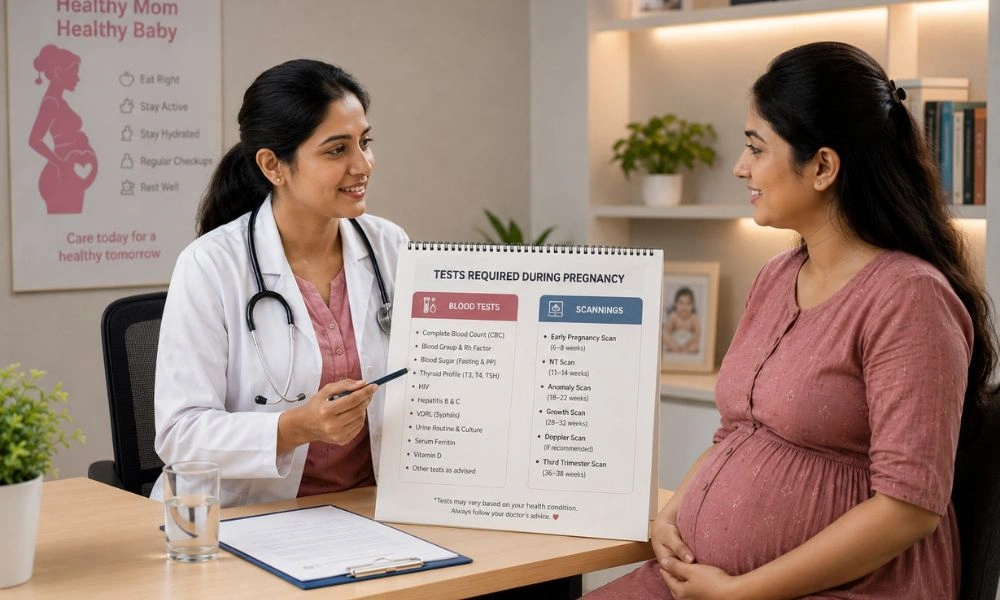
The World Health Organization recommends at least eight contacts with a health professional during pregnancy. A typical pattern is:
- First visit (ideally before 12 weeks): history, examination, blood group, blood count, urine tests and blood pressure
- 11 to 14 weeks: dating scan to confirm the due date and number of babies
- 18 to 21 weeks: detailed scan
- 24 to 28 weeks: a test for gestational diabetes where advised
- 28 weeks onwards: more frequent visits, with checks of growth, movements and blood pressure, and early talks about feeding and life after the birth
See our pages on antenatal care and high-risk pregnancy care, and our guide to scans in pregnancy.
Where You Deliver
Sai Speciality Center is a specialist clinic, not a hospital. Your antenatal care takes place at the clinic with Dr. Kavitha Lakshmi Easwaran, and your delivery is planned with her at a partner hospital. At your first visit we explain which hospital that is and how the arrangements work, so that you know where you will deliver well before your due date.
Ask at your first visit what the hospital offers after the birth, such as help with feeding, a paediatric check for the baby, and how long mothers usually stay. Our guide on how to choose a maternity hospital lists the questions to ask any hospital.
Warning Signs in Pregnancy: When to Call or Go to Hospital
- Vaginal bleeding
- Severe or constant abdominal pain
- Fluid leaking from the vagina
- Severe headache, blurred vision, or sudden swelling of the face and hands
- Fever, or burning when passing urine
- Your baby moving less than usual
- Regular painful tightening before 37 weeks
Do not wait for your next appointment. Call the clinic, or go to the nearest hospital emergency department if it is out of hours or the problem is severe.
Getting to the Clinic from Marathahalli
The clinic is at 201-1, 1st A Cross, 2nd Main Road, East of NGEF Layout, Kasturi Nagar, Bengaluru 560043. Marathahalli lies on the eastern side of the city, and the Outer Ring Road is the main route, with heavy traffic at many hours. Travel times vary widely, so call 80887 01001 or 99019 25700 to book and ask for a quieter slot. After a delivery, particularly after a caesarean, ask whether your follow-up can be timed to avoid peak traffic, and let someone drive you. For a wider view of our work in this part of the city, see gynaecologist care in East Bangalore and our page for Indiranagar.
Meet the Doctor
Dr. Kavitha Lakshmi Easwaran is a Senior Consultant Obstetrician and Gynaecologist. Her qualifications are MBBS and MD (OBG), and her Karnataka Medical Council registration number is 69643. You do not have to take our word for this: doctors registered in India are listed on the National Medical Commission’s Indian Medical Register, and you can search for a name there. We encourage you to do the same check for any doctor you are considering.
Dr. Kavitha’s approach is to explain each test and decision in plain words, so that you and your family know what is happening and why. Women are welcome to ask about recovery, feeding, mood and family planning at any visit, before or after the birth.
Other Maternity Pages
- Maternity care in Bangalore: how to choose a hospital and what to ask
- Maternity care for patients from KR Puram, Horamavu and Banaswadi
- Maternity care near Indiranagar
- Maternity care near Kalyan Nagar
- Maternity care near RT Nagar
- Maternity care near Hebbal
- Maternity care near Whitefield
- Gynaecologist care in East Bangalore
Frequently Asked Questions
When should I have my first check-up after delivery?
The World Health Organization advises care in a health facility for at least 24 hours after birth, then check-ups at 48 to 72 hours, 7 to 14 days and about six weeks. Your doctor will plan the schedule with you.
What is the six-week postnatal check for?
It reviews your recovery, bleeding, scar or stitches, feeding, mood, contraception and any problems from pregnancy, such as high blood pressure or diabetes.
How long does bleeding last after birth?
Bleeding usually becomes lighter over several weeks. Call us if it becomes heavy again, if you pass large clots, or if there is a foul smell or fever.
When can I walk and exercise after a caesarean?
Short walks are usually encouraged soon after surgery. Your doctor will tell you when to lift, drive and begin exercise, depending on your recovery.
Is it normal to feel low after the baby is born?
A few days of feeling low or tearful are common. If low mood, worry or hopelessness last more than about two weeks or become worse, tell your doctor. Postnatal depression is common and treatable.
When can I become pregnant again?
You can become pregnant before your periods return, even while breastfeeding. Discuss contraception and the right gap between pregnancies with your doctor.
Do you see the baby too?
We care for the mother. Your baby needs a paediatrician for feeding, weight, jaundice and vaccines, and we advise you to choose one before the birth.
Can I take traditional foods and herbal remedies while breastfeeding?
Ask your doctor first. Some are suitable and some are not, depending on your health and any medicine you take.
Where will I deliver?
At a partner hospital, with Dr. Kavitha. We explain the arrangements at your first visit.
When should I book my first antenatal visit?
As soon as a home test is positive, ideally before 12 weeks.
What should I do in an emergency?
Go to the nearest hospital emergency department and call us. Do not wait for an appointment if you have heavy bleeding, fever, severe pain, breathlessness or reduced baby movements in pregnancy.
Book a Maternity Consultation
To book your first antenatal visit, a second opinion or a pre-pregnancy check, call 80887 01001 or 99019 25700, or use the contact page. The clinic is at 201-1, 1st A Cross, 2nd Main Road, East of NGEF Layout, Kasturi Nagar, Bengaluru 560043 (open in Google Maps).
About this page: it is general information prepared by Sai Speciality Center, last updated in October 2026. It is not advice for any one patient and does not replace advice from your own doctor. If you think you are in an emergency, go to the nearest hospital emergency department.