

Pre-Pregnancy and Antenatal Care for Patients from Kalyan Nagar
The right time to start looking after a pregnancy is before it begins. If you live in Kalyan Nagar and are planning a baby, or you have just seen a positive test, Sai Speciality Center offers a pre-pregnancy check and complete antenatal care with Dr. Kavitha Lakshmi Easwaran, MBBS, MD (OBG). The clinic is in Kasturi Nagar, on the same side of the city.
We are a specialist clinic, not a hospital. Antenatal care is with us, and delivery is planned with Dr. Kavitha at a partner hospital. This page covers what a pre-pregnancy visit involves, what to do in the first weeks, and how to prepare as a first-time family.
Quick answers
- Should I see a doctor before I try to conceive? It helps. A visit lets us check your health, review medicines and plan vitamins and vaccines.
- Which vitamin matters most early on? Folic acid, 400 micrograms a day, from before pregnancy until 12 weeks, according to NHS advice. Some women need a higher dose on prescription.
- When should I book after a positive test? As soon as you can, ideally before 12 weeks.
- When should we ask for help with conceiving? After about a year of trying, or sooner if you are over 35 or your periods are irregular.
- How do I book? Call 80887 01001 or 99019 25700.
Why a Pre-Pregnancy Visit Is Worth Having
Most of a baby’s organs form in the first weeks of pregnancy, often before a woman knows she is pregnant. That is why advice about vitamins, medicines and health conditions is most useful before conception. A pre-pregnancy visit is short, usually calm, and gives you a plan for the months ahead.
At the visit, we typically:
- Take a full history, including your periods, earlier pregnancies, surgeries and family history
- Check your blood pressure, weight and general health
- Review every medicine you take, including herbal remedies and supplements, and advise which are safe
- Check for conditions that affect pregnancy, such as thyroid disease, diabetes, anaemia and PCOS, with tests where they are needed
- Talk about vaccines, such as MMR and chickenpox protection, which are ideally sorted out before pregnancy
- Discuss weight, food, exercise, alcohol and smoking, and help you with changes you want to make
- Explain how to track your cycle and when to expect a positive test
Our page on preconception care gives more detail. The NHS guide to planning your pregnancy covers similar ground.
Folic Acid, Vitamin D and Other Supplements
The NHS recommends 400 micrograms of folic acid a day, starting before pregnancy and continuing until you are 12 weeks pregnant. If you did not take it before conceiving, start as soon as you know you are pregnant. Some women, for example those with diabetes or those taking certain epilepsy or HIV medicines, may need a higher dose of 5 milligrams on prescription. Do not decide this yourself. Ask your doctor.
The NHS also advises 10 micrograms of vitamin D a day, and warns against supplements that contain vitamin A (retinol) and against eating liver in pregnancy, because too much vitamin A can harm the baby. Check labels carefully, since some multivitamins and cod liver oil contain it. For more, see the NHS page on vitamins and supplements and the NHS list of foods to avoid. Our own articles on which Indian fish are safe in pregnancy and halim seeds in pregnancy answer two questions that families in Bangalore ask often.
If You Are Planning a Baby and It Is Taking Time
Most healthy couples conceive within a year of trying regularly. If you have been trying for about a year without success, or six months if the woman is over 35, it is reasonable to ask for an assessment. Do not wait if you already know of a reason, such as very irregular or absent periods, previous pelvic infection or surgery, or a known problem with the man’s sperm.
The first steps are simple. For the woman, they usually include a history, an examination, a scan and a few blood tests. For the man, they usually include a semen test, and our article on male fertility tests explains what is checked. Our pages on infertility evaluation and ovulation induction describe the next steps if a cause is found. Many couples need no more than timing advice and treatment of a thyroid or PCOS problem. You may also like our guide to a fertility check-up for couples.
If PCOS or irregular periods may be the reason, see our page on PCOS and PCOD treatment. Women over 30 who are weighing the right time to start a family may find our article on age and fertility after 30 useful.
The First Weeks: What to Expect and What to Do
A positive home test is the start of a long list of questions. In the first weeks, these steps help:
- Book your first visit. Ideally before 12 weeks. We confirm the pregnancy, check where it is, and plan your tests and scans.
- Keep taking folic acid until 12 weeks, and check any other medicine with a doctor.
- Eat regular, simple meals. Nausea is common and usually eases after the first three months. Small, frequent meals and plenty of fluids help.
- Do not stop prescribed medicines for thyroid, blood pressure, diabetes or epilepsy without asking your doctor.
- Avoid alcohol and tobacco, and ask for help if you find this hard.
- Note bleeding or pain. Light spotting can be harmless, but any bleeding, and any strong or one-sided pain, needs a prompt check, because it can be a sign of miscarriage or of a pregnancy outside the womb.
Tiredness, nausea, tender breasts, frequent urination and mood swings are common in the first three months. They are uncomfortable, but they are usually not dangerous. Severe vomiting where you cannot keep anything down, fever, burning when passing urine, or very heavy bleeding need a doctor soon. Our article on a recurrent urinary infection explains why infections in women are worth treating early.
Preparing as a First-Time Family
Many families in Kalyan Nagar are young, live in apartments, and may have relatives in other cities. That can mean a lot of planning with little help close by. Some practical points:
- Decide who will go with you to the main visits and scans, and who can be reached quickly in an emergency.
- Plan for help after the birth. The first weeks are tiring. Decide early who will stay, cook and help, and what each person will do.
- Talk about money early. Check your insurance, waiting periods and likely hospital charges well before the final months.
- Plan work and leave. Speak to your employer about your leave and when to hand over tasks.
- Learn the signs of labour and agree a travel plan, including a back-up if your vehicle is not available.
- Be wary of advice from social media and forwards. Ask your doctor about foods, home remedies and exercises before you try them.
Our article on safe pregnancy exercises explains what activity is generally suitable at each stage. Our long guide, everything you need to know about pregnancy care at Sai Speciality Center, answers many first-time questions.
Your Antenatal Schedule at a Glance
The World Health Organization recommends at least eight contacts with a health professional during pregnancy. The timetable depends on your health, but a typical pattern is:
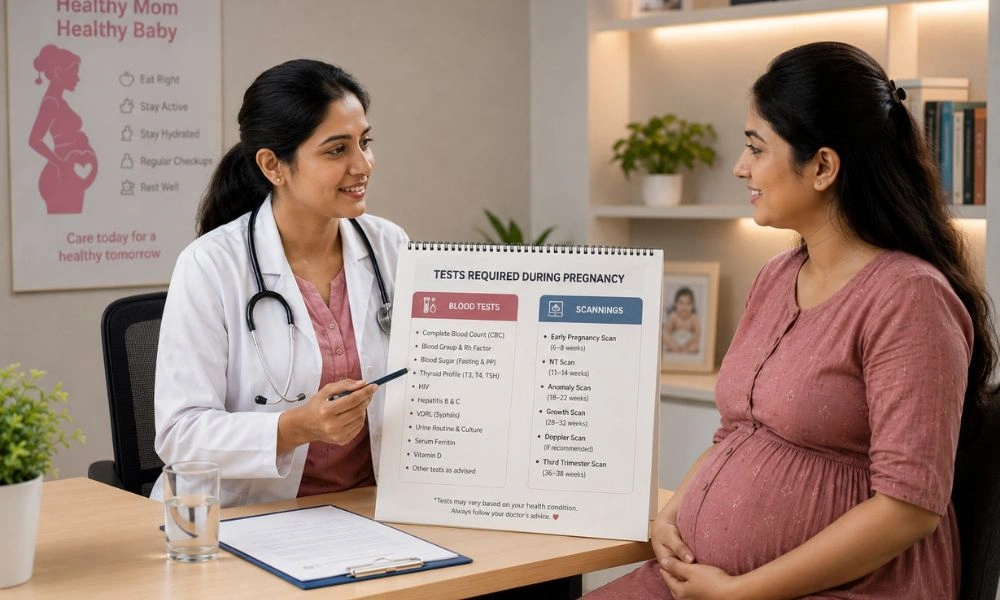
- First visit (ideally before 12 weeks): history, examination, blood group, blood count, urine tests and blood pressure
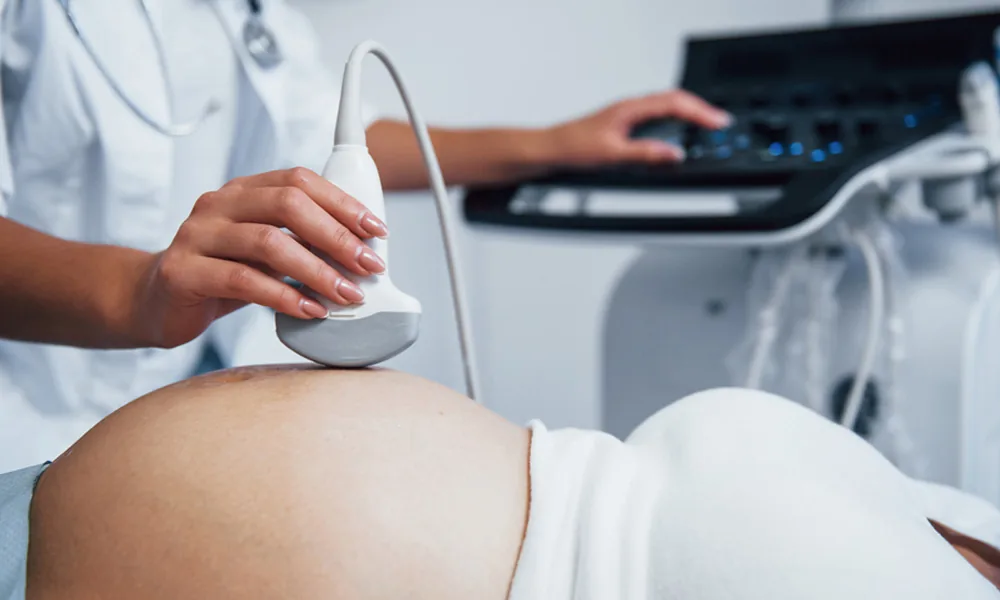
- 11 to 14 weeks: dating scan to confirm the due date and number of babies, and a talk about screening
- 18 to 21 weeks: detailed scan of the baby’s development
- 24 to 28 weeks: a test for gestational diabetes where it is advised
- 28 weeks onwards: more frequent visits, with checks of growth, movements and blood pressure
Read more on our pages for antenatal care and pregnancy tests, and see our guide to when each scan is needed. Vaccines in pregnancy are covered in our article on the pregnancy vaccination schedule.
Where You Deliver
Sai Speciality Center is a specialist clinic, not a hospital. Your antenatal care takes place at the clinic with Dr. Kavitha Lakshmi Easwaran, and your delivery is planned with her at a partner hospital. At your first visit we explain which hospital that is and how the arrangements work, so that you know where you will deliver well before your due date.
When you plan for a first baby, ask early about the hospital: how far it is from home, whether it has a newborn intensive care unit, and what the package covers. Our guide on how to choose a maternity hospital gives the questions to ask.
Warning Signs: When to Call or Go to Hospital
- Vaginal bleeding
- Severe or constant abdominal pain
- Fluid leaking from the vagina
- Severe headache, blurred vision, or sudden swelling of the face and hands
- Fever, or burning when passing urine
- Your baby moving less than usual
- Regular painful tightening before 37 weeks
Do not wait for your next appointment. Call the clinic, or go to the nearest hospital emergency department if it is out of hours or the problem is severe.
Getting to the Clinic from Kalyan Nagar
The clinic is at 201-1, 1st A Cross, 2nd Main Road, East of NGEF Layout, Kasturi Nagar, Bengaluru 560043. Kalyan Nagar and Kasturi Nagar are on the same side of the city, so many families from Kalyan Nagar can reach us without crossing it. Travel times depend on the hour, so ask when you call 80887 01001 or 99019 25700 which times are quiet. Bring your reports, a water bottle and your partner or a family member if you can. We also see women from nearby areas, and you can read our page for KR Puram, Horamavu and Banaswadi.
Meet the Doctor
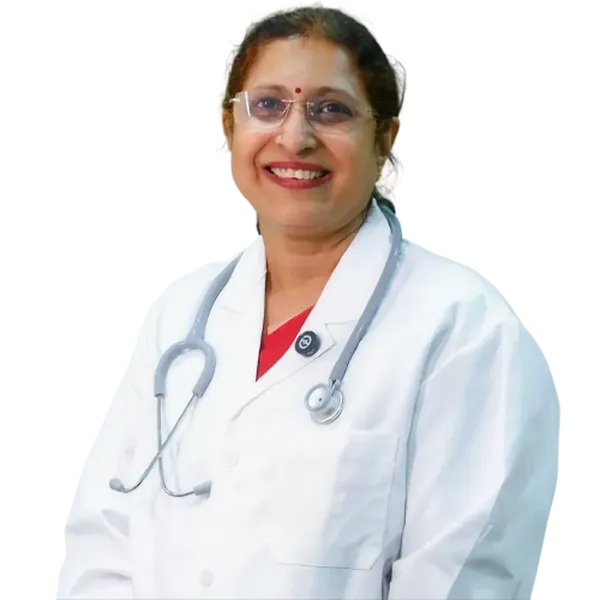
Dr. Kavitha Lakshmi Easwaran is a Senior Consultant Obstetrician and Gynaecologist. Her qualifications are MBBS and MD (OBG), and her Karnataka Medical Council registration number is 69643. You do not have to take our word for this: doctors registered in India are listed on the National Medical Commission’s Indian Medical Register, and you can search for a name there. We encourage you to do the same check for any doctor you are considering.
Dr. Kavitha’s approach is to explain each test and decision in plain words, so that you and your family know what is happening and why. Women who are planning a pregnancy are welcome as well as those who are already pregnant, and both partners can bring their questions.
Other Maternity Pages
- Maternity care in Bangalore: how to choose a hospital and what to ask
- Maternity care for patients from KR Puram, Horamavu and Banaswadi
- Maternity care near Indiranagar
- Maternity care near RT Nagar
- Maternity care near Hebbal
- Maternity care near Whitefield
- Maternity care near Marathahalli
- Gynaecologist care in East Bangalore
Frequently Asked Questions
Do I need to see a doctor before I try for a baby?
It is not compulsory, but it helps. A pre-pregnancy visit lets us check your health, review medicines, plan vitamins and vaccines, and treat problems such as thyroid disease or anaemia before they affect a pregnancy.
How much folic acid should I take?
The NHS advises 400 micrograms a day from before pregnancy until 12 weeks. Some women need 5 milligrams on prescription, for example those with diabetes or on certain epilepsy medicines. Ask your doctor which applies to you.
Can I keep taking my regular medicines when I plan a pregnancy?
Do not stop any prescribed medicine on your own. Some must continue and others need changing. Bring a list to your visit so that your doctor can review them.
How long should we try before seeking help with conceiving?
About a year of regular attempts, or six months if the woman is over 35. Seek advice sooner if your periods are very irregular or absent, or if you know of a relevant health problem.
When should I book my first antenatal visit after a positive test?
As soon as you can, ideally before 12 weeks. An early visit lets us confirm the pregnancy and plan your scans and tests.
Is light spotting in early pregnancy normal?
Light spotting can happen and is often harmless, but any bleeding should be checked, and strong or one-sided pain needs a prompt visit.
Which scans will I need?
Most women have a dating scan at about 11 to 14 weeks and a detailed scan at about 18 to 21 weeks. Extra scans are arranged if there is a reason.
Where will I deliver?
At a partner hospital, with Dr. Kavitha. We explain the arrangements at your first visit.
I am a first-time mother. What should I ask at my first visit?
Ask about the schedule of visits and scans, which tests are needed and why, which medicines and foods to avoid, the signs that need urgent care, and how delivery will be planned.
Can my husband or family come to the visits?
Yes. We encourage partners and family to come, especially to the scans and to the visits where plans for the birth are discussed.
What should I do in an emergency?
Go to the nearest hospital emergency department and call us. Do not wait for an appointment if you have bleeding, severe pain, leaking fluid or reduced baby movements.
Book a Maternity Consultation
To book your first antenatal visit, a second opinion or a pre-pregnancy check, call 80887 01001 or 99019 25700, or use the contact page. The clinic is at 201-1, 1st A Cross, 2nd Main Road, East of NGEF Layout, Kasturi Nagar, Bengaluru 560043 (open in Google Maps).
About this page: it is general information prepared by Sai Speciality Center, last updated in October 2026. It is not advice for any one patient and does not replace advice from your own doctor. If you think you are in an emergency, go to the nearest hospital emergency department.