

Maternity Care near RT Nagar: Pregnancy After 35 and High-Risk Pregnancy
If you are expecting after 35, have a long-term health condition, or have had a difficult pregnancy before, you need a doctor who plans your care in detail and explains it calmly. Sai Speciality Center offers antenatal and high-risk pregnancy care to women from RT Nagar and nearby areas, led by Dr. Kavitha Lakshmi Easwaran, MBBS, MD (OBG).
We are a specialist clinic, not a hospital. Antenatal care is with us, and delivery is planned with Dr. Kavitha at a partner hospital. For a higher-risk pregnancy, the choice of delivery hospital matters more, and we help you think it through.
Quick answers
- Is pregnancy after 35 always high risk? No. Many women over 35 have healthy pregnancies. Risk depends more on health conditions than on age alone, though some problems become more likely and are watched for.
- What extra care might I need? More frequent visits, earlier blood sugar and blood pressure checks, and extra scans where advised.
- Can I plan a vaginal birth after 35? Often yes. It depends on your health, the baby and how labour goes.
- Which hospital should I choose? One with an operating theatre ready at all hours and a newborn intensive care unit in the same building.
- How do I book? Call 80887 01001 or 99019 25700.
Pregnancy After 35: What Changes and What Does Not
Many women now start a family in their mid and late thirties, after building careers or when they feel ready. Doctors once used the label “elderly primigravida” for first-time mothers over 35, and it still appears on some notes. It is an unkind and outdated phrase, and it overstates the problem. Most women over 35 have a healthy pregnancy and a healthy baby.
What does change is the likelihood of certain conditions. According to the NCT, which summarises the research for UK parents, the conditions linked with higher maternal age include chronic high blood pressure, gestational diabetes and a low-lying placenta, but the NCT also points out that the issue is the health problem, not the age on its own. The chance of a chromosome condition in the baby rises gradually from the mid-twenties, and the chance of a twin pregnancy is higher, especially after fertility treatment. Miscarriage becomes more likely with age too, although most pregnancies over 40 still end well. You can read the summary in the NCT guide to pregnancy and birth over 35.
The practical message is simple: start care early, have the checks that are offered, and tell your doctor about any symptom without waiting.
The Checks That Are Commonly Advised
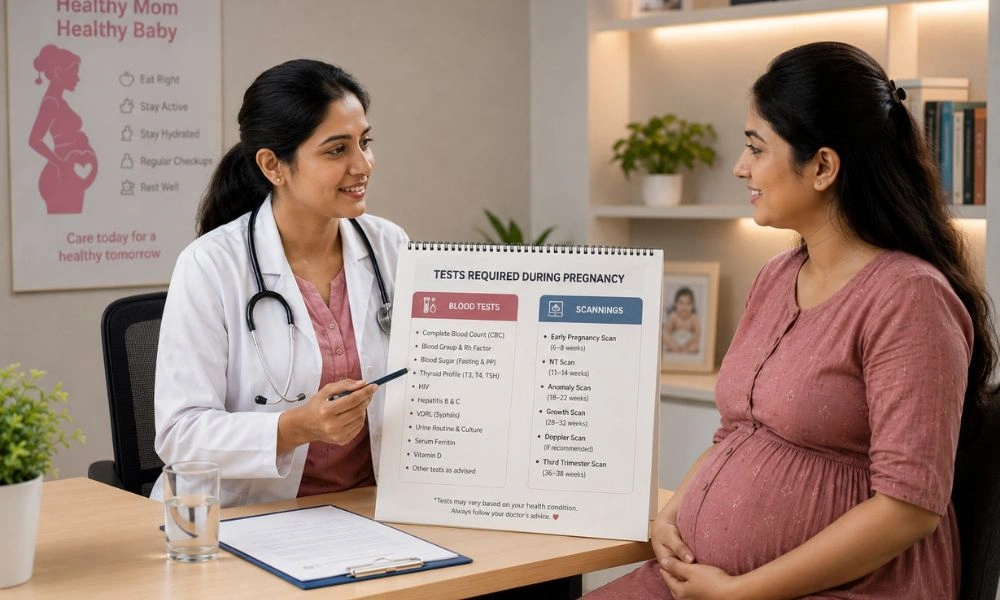
Dr. Kavitha decides what you need after taking your history and examining you. For women over 35, the plan often includes the following:
- An early booking visit, ideally before 12 weeks, so that your baseline health is known
- Blood pressure checks at every visit, and urine tests for protein
- Early screening for diabetes if you have risk factors, and a glucose test at 24 to 28 weeks for everyone
- Thyroid and blood count tests, since thyroid disease and anaemia are common
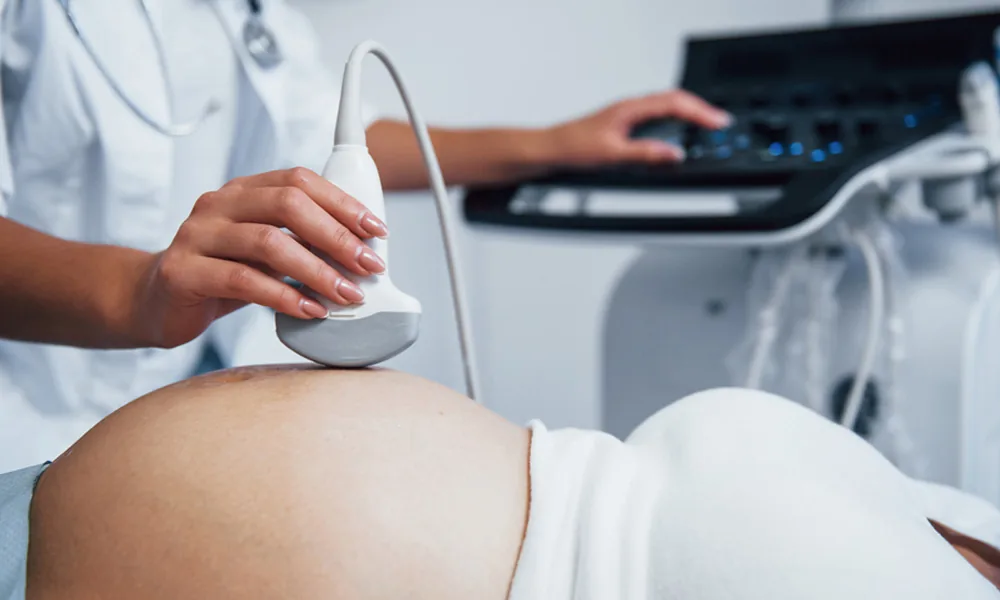
- A dating scan at 11 to 14 weeks, where screening for chromosome conditions can be discussed. Screening gives a chance, not a diagnosis, and a result that suggests higher chance is followed by a conversation about further tests
- A detailed scan at 18 to 21 weeks to check the baby’s structure and the position of the placenta
- Growth scans later, where advised, to check that the baby is growing as expected
Whether to have screening or diagnostic tests is your decision. A good doctor explains what each test can and cannot tell you, and respects your choice. Our page on pregnancy care and pregnancy tests and the article on key tests for mothers explain the usual tests in detail. Our article on the cervical length scan describes one extra scan some women are offered.
Long-Term Conditions and Pregnancy
Many women who see us already live with a condition. A plan made early, and reviewed at every visit, keeps both mother and baby safe.
Diabetes
Women with diabetes before pregnancy need tight sugar control from before conception, a careful review of medicines, and extra scans to watch the baby’s growth. Gestational diabetes, which appears in pregnancy, is common and is managed with food planning, activity and, if needed, medicine.
High blood pressure and pre-eclampsia
High blood pressure can be present before pregnancy or appear after 20 weeks. Pre-eclampsia is a serious condition marked by high blood pressure and protein in the urine, sometimes with headache, blurred vision or swelling. It is why we check blood pressure and urine at every visit. Do not ignore a severe headache or sudden swelling.
Thyroid disease
An under-active thyroid is common among Indian women and is easily treated, but the dose of medicine often changes in pregnancy. Do not stop your tablets. Our article on thyroid problems in women explains the signs.
PCOS, fibroids and endometriosis
PCOS can make conception and early pregnancy harder, and it is linked with gestational diabetes. Fibroids can affect the baby’s position, and endometriosis can affect fertility. If you have any of these, the plan includes closer follow-up. See our pages on PCOS and PCOD treatment and endometriosis treatment.
Earlier caesarean, miscarriage or preterm birth
After a caesarean, many women can try a vaginal birth in the next pregnancy and some need another caesarean. After a loss or an early birth, a closer plan is made. In all these cases, the details of the earlier event matter, so bring every record you have.
Expecting Twins
Twin pregnancies are more common after fertility treatment and with age. They need more frequent visits, extra scans to check each baby’s growth, closer watch on blood pressure and anaemia, and an earlier plan for delivery. Because twins are often born earlier than single babies, the delivery hospital must have a newborn intensive care unit. Tell us as soon as a scan shows twins, and we will plan the schedule.
Choosing a Hospital When Your Pregnancy Is Higher Risk
With a higher-risk pregnancy, check these points with every hospital you consider:
- A newborn intensive care unit in the same building, and a paediatrician or neonatologist available at night
- An operating theatre and anaesthetist available round the clock
- Blood available at short notice
- Experience with your specific condition, for example diabetes or twins
- A written estimate that explains what happens to the cost if the baby needs intensive care
- A travel time you can manage at any hour
Our guide on how to choose a maternity hospital gives the full list, and the page on maternity care in Bangalore explains how to verify a hospital’s claims on the Indian Medical Register and the NABH list. We are happy to talk through which partner hospital suits your situation. Our article on high-risk pregnancy care explains what a good service offers.
Looking After Yourself
Good habits make a difference at any age. Eat regular balanced meals, take the vitamins your doctor advises, stay active in the way your doctor approves, sleep enough, and avoid alcohol and tobacco. The NHS advises 400 micrograms of folic acid daily until 12 weeks and 10 micrograms of vitamin D, and warns against vitamin A supplements and liver in pregnancy; see its vitamin guidance. For gentle movement, read our article on safe pregnancy exercises. Your mood matters as well. Anxiety is common when a pregnancy has been long awaited, and you should tell your doctor if worry is taking over your days.
Your Antenatal Schedule at a Glance
The World Health Organization recommends at least eight contacts during pregnancy. For a higher-risk pregnancy there are usually more. A typical pattern is:
- First visit (ideally before 12 weeks): history, examination, blood group, blood count, urine tests, blood pressure, and a plan
- 11 to 14 weeks: dating scan and discussion of screening
- 18 to 21 weeks: detailed scan
- 24 to 28 weeks: glucose test, and a review of blood pressure and anaemia
- 28 to 36 weeks: visits every two to three weeks, or sooner if advised, with growth scans where needed
- 36 weeks onwards: weekly checks, and detailed birth planning
See our pages on antenatal care and high-risk pregnancy care, and the article on high-risk pregnancy warning signs.
Where You Deliver
Sai Speciality Center is a specialist clinic, not a hospital. Your antenatal care takes place at the clinic with Dr. Kavitha Lakshmi Easwaran, and your delivery is planned with her at a partner hospital. At your first visit we explain which hospital that is and how the arrangements work, so that you know where you will deliver well before your due date.
For a high-risk pregnancy, we strongly suggest that you settle the hospital by the end of the second trimester, check how to reach it, and keep your reports and antenatal file ready. The page on delivery guidance explains our approach to birth planning.
Warning Signs: When to Call or Go to Hospital
- Vaginal bleeding
- Severe or constant abdominal pain
- Fluid leaking from the vagina
- Severe headache, blurred vision, or sudden swelling of the face and hands
- Fever, or burning when passing urine
- Your baby moving less than usual
- Regular painful tightening before 37 weeks
If you have high blood pressure or diabetes, take these signs even more seriously. Do not wait for your next appointment. The NHS advice on reduced baby movements is to call at once, even in the middle of the night. Call the clinic, or go to the nearest hospital emergency department if it is out of hours or severe.
Getting to the Clinic from RT Nagar
The clinic is at 201-1, 1st A Cross, 2nd Main Road, East of NGEF Layout, Kasturi Nagar, Bengaluru 560043. RT Nagar lies in the north of the city. Travel time to Kasturi Nagar depends greatly on the hour and the traffic on the main roads, so call 80887 01001 or 99019 25700 to book and ask which times are quieter. Because visits for higher-risk pregnancies are more frequent, think about how you will manage the drive in the last trimester, and share the driving or arrange a regular vehicle. Our guide for mothers near Ramamurthy Nagar and our page for KR Puram, Horamavu and Banaswadi may help if you live on that side.
Meet the Doctor
Dr. Kavitha Lakshmi Easwaran is a Senior Consultant Obstetrician and Gynaecologist. Her qualifications are MBBS and MD (OBG), and her Karnataka Medical Council registration number is 69643. You do not have to take our word for this: doctors registered in India are listed on the National Medical Commission’s Indian Medical Register, and you can search for a name there. We encourage you to do the same check for any doctor you are considering.
Dr. Kavitha’s approach is to explain each test and decision in plain words, so that you and your family know what is happening and why. The aim is to explain screening results and options clearly, so that you can decide at your own pace.
Other Maternity Pages
- Maternity care in Bangalore: how to choose a hospital and what to ask
- Maternity care for patients from KR Puram, Horamavu and Banaswadi
- Maternity care near Indiranagar
- Maternity care near Kalyan Nagar
- Maternity care near Hebbal
- Maternity care near Whitefield
- Maternity care near Marathahalli
- Gynaecologist care in East Bangalore
Frequently Asked Questions
Is pregnancy after 35 high risk?
Not automatically. Many women over 35 have healthy pregnancies. Some conditions, such as high blood pressure and gestational diabetes, become more likely, so the plan usually includes closer checks.
What extra tests are done after 35?
The plan depends on your health. It often includes early booking, blood pressure and sugar checks, thyroid and blood count tests, a dating scan with a talk about screening, a detailed scan, and growth scans where advised.
Can I have a normal delivery after 35?
Often yes. It depends on your health, the baby’s position and growth, and how labour progresses. Your doctor will discuss the options with you.
Do I have to have screening for chromosome conditions?
No. Screening is a choice. Your doctor explains what it can and cannot tell you, and you decide whether to have it.
I have diabetes. Can I have a safe pregnancy?
Yes, with good planning. Control your sugar before conception if you can, review your medicines with your doctor, and expect more visits and scans.
What are the signs of pre-eclampsia?
Severe headache, blurred vision, sudden swelling of the face and hands, and pain below the ribs. It is detected by blood pressure and urine checks, which is why they happen at every visit. Report these symptoms at once.
How should I choose a hospital for a high-risk pregnancy?
Look for a newborn intensive care unit in the same building, an operating theatre and anaesthetist at all hours, blood availability, experience with your condition and a travel time you can manage.
I am expecting twins. How does my care change?
You will have more visits and extra growth scans, closer checks of blood pressure and anaemia, and an earlier delivery plan. The delivery hospital should have a newborn intensive care unit.
Where will I deliver if I see you?
At a partner hospital, with Dr. Kavitha. We explain the arrangements at your first visit and help you think through which hospital suits your pregnancy.
Should I keep taking my thyroid or blood pressure tablets?
Yes, unless your doctor tells you to change them. The dose often needs adjusting in pregnancy, so tell your doctor as soon as you know you are pregnant.
What should I do in an emergency?
Go to the nearest hospital emergency department and call us. Do not wait for an appointment if you have bleeding, severe pain, leaking fluid, severe headache or reduced baby movements.
Book a Maternity Consultation
To book your first antenatal visit, a second opinion or a pre-pregnancy check, call 80887 01001 or 99019 25700, or use the contact page. The clinic is at 201-1, 1st A Cross, 2nd Main Road, East of NGEF Layout, Kasturi Nagar, Bengaluru 560043 (open in Google Maps).
About this page: it is general information prepared by Sai Speciality Center, last updated in October 2026. It is not advice for any one patient and does not replace advice from your own doctor. If you think you are in an emergency, go to the nearest hospital emergency department.
Sources
- NCT: Pregnancy and birth over 35
- WHO: Recommendations on antenatal care for a positive pregnancy experience (2016)
- NHS: Your antenatal appointments
- NHS: Vitamins, supplements and nutrition in pregnancy
- NHS: Your baby’s movements
- National Medical Commission: Indian Medical Register
- NABH: Find a healthcare organisation